PART 6 (THE END): The Quiet Rhythm Beneath the Laughter 069
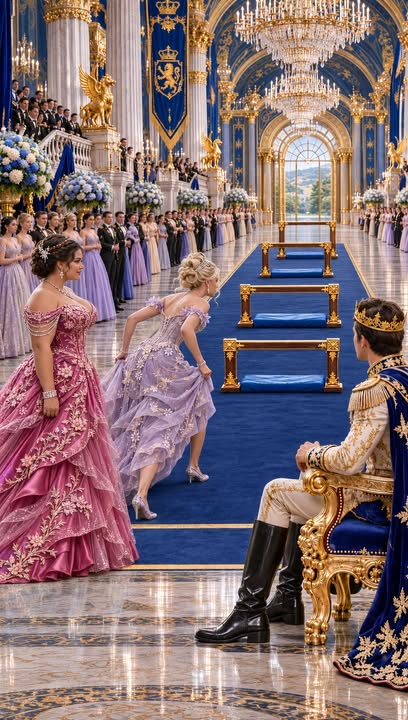
Part 6 – A Finish Line of Her Own
The archivist lowered the letter, and the library seemed to hold its breath.
The king did not look at Mara or Adrian.
He was staring at the words his mother had written, his hands resting open on the table as if he had set down something heavier than paper.
“Please continue,” he said.
The archivist read the letter’s next lines.
“Elaine says she will not accept an apology that asks her to keep quiet about the loose support, or one that describes her injury as her own failure.”
Mara felt the stopwatch press into her palm.
The letter continued.
“Your mother writes that Elaine asked for the event to be investigated and the course corrected before anyone else could be hurt,” the archivist said. “She also asked that the palace acknowledge publicly that she had warned the officials.”
The king closed his eyes.
“Did my mother approve that request?” Adrian asked.
“She appears to have tried,” the archivist replied. “The letter says she asked for the original report because she did not trust the summary she had been given.”
“Then why was there no apology?” Mara asked.
The archivist studied the final paragraph.
“She says the king’s office advised her that a public acknowledgment could expose staff before the facts had been verified. She urged you to meet Elaine directly, but the letter does not say whether that happened.”
The king opened his eyes.
“I never met her.”
Mara’s breath caught, though she had not expected another answer.
“Did you receive this letter?” Adrian asked.
The king looked at the envelope.
“I don’t remember seeing it.”
“Could it have been kept from you?” Mara asked.
“I can’t say.” He looked toward the archivist. “Is there a record of how it came to be filed with my mother’s private correspondence?”
“Not yet, Your Majesty. I’ll trace its catalog history and compare it with the other records.”
“Please do.”
The king sat down slowly.
“My mother tried to find a way to correct what had happened,” he said. “I let the matter rest because I believed it had already been handled.”
“You signed the letter blaming my mother,” Mara said.
“Yes.”
“And then you didn’t ask her what happened.”
“No.”
There was no excuse in his voice now, only the fact of what he had done and what he had failed to do.
Mara wished that truth could make the past less painful.
It could not.
But it was the first time the palace had let the whole shape of the wrong appear in the room.
Adrian reached for the letter, then stopped before touching it.
“Father, the review is complete enough to confirm the essential facts,” he said. “The palace ignored a safety warning, and afterward it let Elaine carry the blame.”
The king looked at the documents gathered before them.
“Yes.”
“We have to release the report.”
“Yes.”
“And her letter.”
The king looked at Mara.
“If you agree.”
Mara had not expected to be asked whether the record should be shared.
She considered the papers, the old ink, and the signature she recognized from the labels her mother had written at home.
“My mother didn’t ask for her story to be hidden,” she said. “She asked for the palace to acknowledge it.”
“Then we will do that,” the king replied.
“Not as a story about an unfortunate accident.”
“No.”
“Not as a story about how the palace learned a lesson and became better without having to say what it did.”
The king lowered his head.
“No.”
“Say that she warned them, that the course was unsafe, and that the palace’s letter afterward was wrong.”
“We will.”
Mara held his gaze.
“And include what is still unknown. Don’t fill the gaps with a version that makes the palace look neat.”
“I agree.”
It was not absolution.
It was a commitment made in front of the people who would have to keep it.
The king’s public statement was prepared with the independent panel’s findings and the archivist’s account of the former queen’s letter.
The report confirmed that Elaine Williams had warned the event officials about a loose hurdle support before her attempt.
The available records could not establish precisely when the support became unstable or which person had last inspected it.
They did establish that the palace had failed to document her warning properly, had ended the event without a clear public explanation, and had later sent her a letter that unfairly blamed her for the fall.
The king’s signature appeared beneath that letter.
He did not ask the palace communications office to remove it from the published record.
On the day of the announcement, Mara stood beside Adrian in the courtyard where she had cleared the hurdles.
The course was gone.
In its place stood a simple lectern, a row of chairs, and a small table holding copies of the report for anyone who wished to read it.
Beyond the courtyard, white roses stirred in the morning breeze.
The crowd gathered quietly, without banners or bright music.
Mara had asked that the announcement not be framed as a selection event, and the palace had listened.
Adrian waited beside her, neither standing too close nor leaving her to face the crowd alone.
The king approached the lectern.
He spoke first of the review and the limits of what the surviving documents could prove.
Then he spoke Elaine Williams’s name.
“Years ago, Elaine Williams warned palace officials that an obstacle support was loose,” he said. “Her warning was not properly acted upon, and she was injured during the trial.”
Mara closed her eyes for one breath.
The king continued.
“Afterward, a letter was sent to her that blamed her for failing to follow instructions. I approved that letter without examining its wording carefully enough, and the palace did not correct it. That was wrong.”
There was no attempt to make the mistake sound smaller.
“There is no statement I can make today that gives Elaine back what she lost,” he said. “I can only acknowledge that the palace failed her, publish what the review has established, and make sure the systems that allowed this to happen are changed.”
He apologized to Elaine’s family and to everyone who had trusted the palace to act responsibly.
When he finished, he stepped away from the lectern and did not ask for applause.
Mara looked toward the chairs.
Her aunt Louise sat in the front row, holding one of her mother’s old photographs.
Beside her, Vanessa had taken a seat with her father, who had come to provide the records from Whitmore Sporting Goods.
Vanessa met Mara’s eyes and gave a small nod.
It was not a gesture asking for praise.
It was a quiet assurance that she had come to stand beside the truth, not her family’s reputation.
The independent panel announced the reforms it had recommended.
Every palace athletic event would use published safety standards and inspections recorded by people independent of the event organizers.
Course designs would be reviewed for a range of abilities and experience, rather than copied from a team of trained athletes and treated as universal.
Candidates and participants would be able to pause, raise a concern, or ask for an adjustment without being treated as difficult.
The palace would also create a public athletic program, open to children and adults from across the community, with trained coaches and safe equipment.
The program would carry Elaine Williams’s name.
Mara listened as the plans were described.
The name of the program was not an award for her success.
It was a recognition of what her mother had tried to protect: the chance for ordinary people to move, learn, and try again without being told they did not belong.
When the questions began, the first came from a local reporter.
“Will Miss Williams continue in the royal selection?”
Mara felt the old expectation settle over the courtyard, the quiet sense that every choice she made might become a symbol.
She stepped toward the lectern before Adrian could answer for her.
“I won’t be continuing as a candidate for marriage,” she said. “That decision is mine, and it isn’t a punishment or a rejection of anyone.”
She saw a few people shift in their seats.
“I came here because I wanted the chance to be considered on my own merits,” she continued. “I found more than I expected, including a history that needed to be told. But my mother’s story does not make me a better candidate, and it does not make the palace’s work finished.”
Her voice remained steady.
“I’m grateful for the reforms being started. I want to help build the program, but I won’t be presented as proof that everything is already fixed.”
The king inclined his head.
Adrian looked at her with pride that did not ask the crowd to notice it.
The questioner lowered the microphone.
Mara stepped away from the lectern and felt something loosen inside her.
For weeks, she had feared that stepping back from the selection would mean losing the only thing she had come to seek.
Instead, she felt as if she had finally chosen her own finish line.
After the announcement, Adrian found her near the rose garden.
He carried no folder this time.
Only her water bottle, which he had picked up from the table.
“You left this behind,” he said.
“Thank you.”
She took it from him, and their fingers brushed.
For a moment, the crowd faded to a soft murmur behind them.
“Are you disappointed?” he asked.
Mara considered the question.
“I’m disappointed that my mother had to wait so long for the truth.”
“I am too.”
“I’m not disappointed that I came.”
“Neither am I.”
She studied him.
“The program will need more than a name and a new sign.”
“I know.”
“It will need people who listen when someone says the equipment isn’t right.”
“Yes.”
“And people who can admit they made a mistake without turning the person who noticed it into the problem.”
“I hope I can be one of them.”
Mara’s expression softened.
“You can start by not promising what you can’t guarantee.”
“Then I’ll say this instead: I want to work beside you, if you want me there.”
She looked beyond him toward the courtyard.
Officials were already speaking with the independent panel about the next steps.
Vanessa had joined them, carrying a box of documents from her family’s company.
She was listening more than speaking.
It seemed like a better beginning than any grand pledge.
“I want to help design the program,” Mara said. “But I want the work to belong to more people than the palace.”
“It should.”
“I want coaches, families, schools, and community groups involved.”
“Then we’ll invite them.”
“And I want you to ask what people need before deciding what they ought to have.”
Adrian’s smile was gentle.
“I can do that.”
Mara searched his face.
There was still a difference between them in rank and history, and no honest conversation could erase it.
What mattered was that he did not pretend otherwise.
“I like you,” she said, “but I don’t want that to become another decision made for me.”
“It won’t.”
“I need time.”
“I can give you time.”
“And I need to know you’ll keep listening when the room stops watching.”
“I will try.”
Mara nodded.
The answer was not perfect, and that was why she believed it.
The first meeting for the Elaine Williams Athletic Program took place two weeks later in a community recreation hall far from the palace’s formal rooms.
The long tables were covered in enrollment forms, safety plans, maps of nearby parks, and cups of tea that went cold while people talked.
Coaches from local schools sat beside palace staff.
Parents brought questions about transport, cost, and accessible facilities.
A retired track coach offered to help train volunteers.
The independent safety adviser marked up the first proposed course with so many notes that the committee eventually laughed.
Mara welcomed every correction.
Vanessa attended with her father and a team from Whitmore Sporting Goods.
Her company offered equipment for the program, but only after the independent panel established the specifications and the selection committee approved them openly.
Vanessa did not sit beside Mara as if one apology had made them close.
Instead, she took the chair across from her and helped check the delivery records.
When the meeting ended, she lingered while the others gathered their coats.
“I was wrong about what made someone fit to be here,” she said.
Mara looked at her.
“You were wrong about me.”
“That too.” Vanessa gave a small, rueful smile. “I’m trying not to make my embarrassment someone else’s burden anymore.”
“That’s a good place to start.”
“I know it doesn’t undo anything.”
“No,” Mara said. “But it changes what happens next.”
Vanessa held her gaze, then nodded.
Their friendship did not appear all at once.
It grew through practical things: shared decisions, honest disagreements, and the quiet respect of doing what each had promised.
Adrian came to the recreation hall when his schedule allowed.
Sometimes he brought questions from the palace committee.
Sometimes he stayed to move chairs or stack clipboards.
He did not make Mara responsible for praising him when he did something ordinary.
When the king attended the program’s first public open day, he came without a ceremonial procession.
He stood among the families beneath a plain blue banner and listened as children asked how the course had been designed.
Before leaving, he spoke with Mara’s aunt and apologized again, this time without a prepared statement between them.
Louise did not offer forgiveness on behalf of her sister.
She did accept his apology.
Mara was grateful that no one tried to make the moment into something larger than it was.
The program opened in early spring.
The new track ran through a public park near the old neighborhood where Mara’s mother had once timed the children racing to the maple tree.
It was not a grand course.
It had no golden arch or polished wooden hurdles.
It had painted lanes, adjustable obstacles, broad landing mats, and a sturdy storage shed stocked with water and first-aid supplies.
A sign at the entrance read:
ELAINE WILLIAMS COMMUNITY ATHLETICS
Below it, in smaller letters, was a line her mother used to say.
Find a pace you can trust.
Families gathered around the track.
Some children ran in bright sneakers.
Others walked the course with a coach, learning how to judge the distance to a low hurdle.
A young girl stopped before the first bar and looked at the people watching her.
Mara recognized the expression: the wish to try tangled with the fear of becoming a story people told afterward.
She crouched beside her.
“You can take all the time you need,” Mara said. “You can walk over it, step around it, or try again when you’re ready.”
The girl touched the padded bar.
“What if I don’t get over?”
“Then we’ll find out what you want to try next.”
The girl considered that, then nodded.
She took a few measured steps and lifted one foot over the obstacle.
She landed safely on the other side.
Her father clapped.
The girl smiled, surprised by her own success, and looked back at the hurdle as if it had become less frightening.
Mara watched her go on.
At the edge of the track, Adrian stood beside Louise and Vanessa.
He had come without a royal escort, wearing a simple jacket and a pair of shoes already marked with dust.
When Mara walked over, he held out something small.
The stopwatch rested in his palm.
“I thought you might want to bring it today,” he said.
“I have it with me.”
He looked puzzled, then saw the familiar outline in her coat pocket.
Mara took out the old watch.
The archivist had arranged for its case to be cleaned and its mechanism repaired by a careful specialist.
It still lost several seconds each hour.
Mara liked it better that way.
She pressed the button.
The hands moved.
A small, clear tick sounded beneath the voices around them.
For years, the watch had carried only a date and a memory she did not fully understand.
Now it carried something else: her mother’s name spoken aloud, the truth preserved in the open, and a future built from the care Elaine had tried to give others.
Mara closed her fingers around it.
“Ready?” Adrian asked.
She looked toward the track, where volunteers were guiding the children through the course.
“I am.”
He did not offer his arm.
He walked beside her.
That evening, after the last family had gone and the folding chairs had been stacked away, the new program staff gathered beneath the sign.
Mara stood with them, the stopwatch in her pocket and the spring air cool against her cheeks.
The courtyard at the palace had once seemed like the place where everyone else would decide what she could become.
This park was smaller, noisier, and full of people who had come for reasons of their own.
No one was being measured for a crown.
No one was being asked to prove that a life had value by crossing a finish line.
Mara watched a child run back to retrieve a water bottle, then race toward her parent with a laugh that carried across the track.
She felt her mother near her, not as a shadow or a wound, but as a steady rhythm she could keep choosing.
Adrian stood at her side.
Their shoulders touched, lightly and without ceremony.
“What happens now?” he asked.
Mara looked at the open track, the waiting hurdles, and the people who had helped build something more honest than the course that came before.
“Now,” she said, “we make room for everyone who wants to try.”
And beneath the sign bearing Elaine Williams’s name, the first evening of the program ended with voices, footsteps, and laughter moving together into the wide, welcoming dusk.
**–THE END–PLEASE
Share your thoughts or feedback to motivate us to create more stories ♥️
* * *
[PREVIOUS: PART 5](https://storyly.idolsgift.com/blog/part-5-the-quiet-rhythm-beneath-the-laughter-069-1)
✓ S. Gary Kenneth
Part 6 – A Finish Line of Her Own The archivist lowered the letter, and the library seemed to hold its breath. The king did not look at Mara or Adrian. He was staring at the words his mother had wr…